General non-fiction
Tommy Cannon – This Is Me
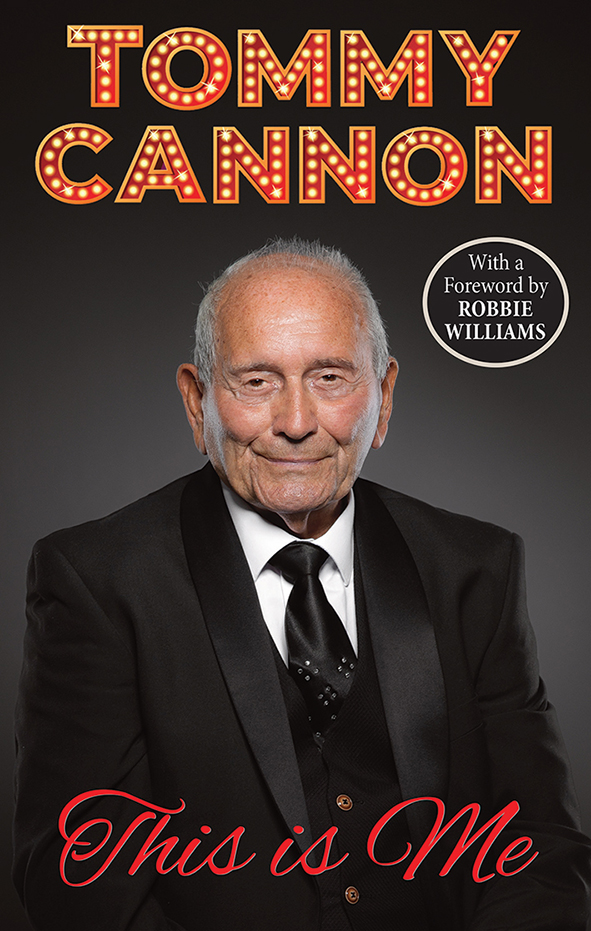
PUBLISHED 24 OCTOBER 2025 – PRE-ORDER NOW
By Tommy Cannon
with a Foreword by Robbie Williams
Jake Thackray – The Unsung Writer
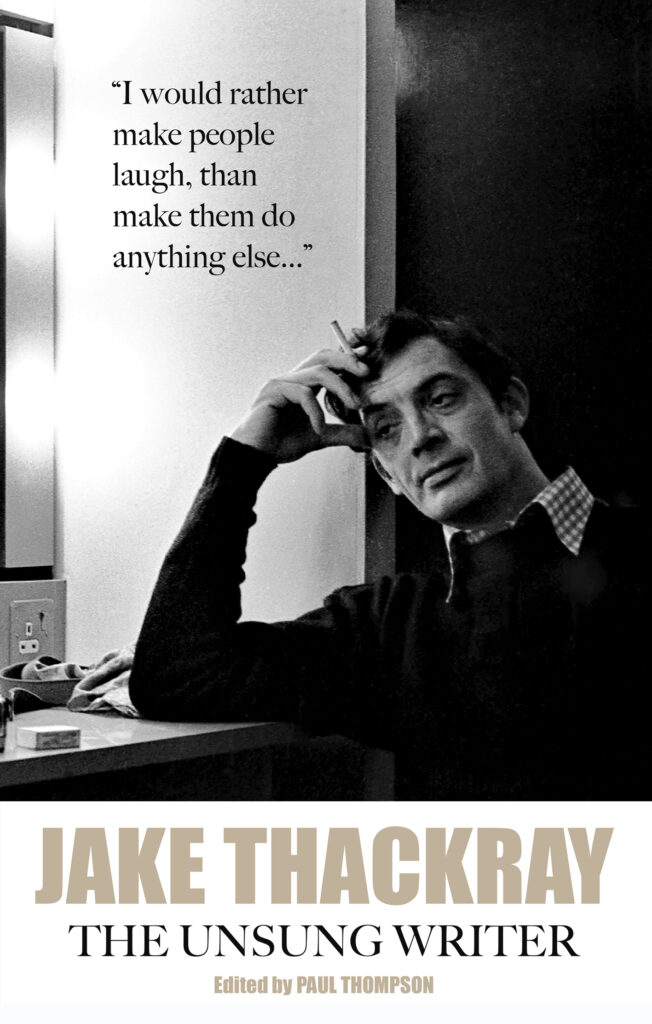
Edited by Paul Thompson
“I would rather make people laugh, than make them do anything else…”
Hilarious, irreverent, poignant, fanciful, quirky, imaginative, original, musical. Jake Thackray was a storytelling genius who loved using words to entertain, move, surprise and provoke. While his extraordinary songs are rightly celebrated, they were not the beginning of his life as a wordsmith, nor the end. Jake Thackray – The Unsung Writer is a chance to explore Jake’s other writings: love poetry; an experimental short story; his charming script for a school musical; amusing pen portraits; his first published work; tall tales crafted for his concerts; and his acclaimed, colourful columns for the ‘Yorkshire Post’ and ‘Catholic Herald’. This entertaining collection provides fresh insights into Jake’s creativity and the development of his distinctive voice.
Paul Thompson is also the co-author of critically-acclaimed biography Beware of the Bull – The Enigmatic Genius of Jake Thackray
Back Up North
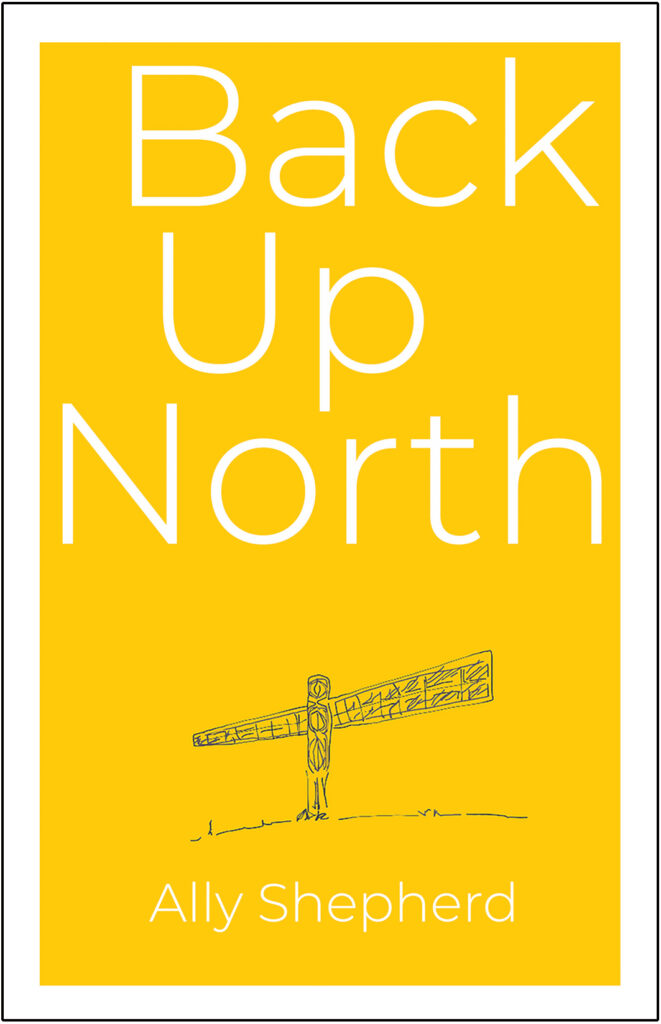
by Ally Shepherd
After a decade overseas, Ally Shepherd got stuck in the Northwest of England amid 2020’s pandemic chaos. She promptly became a born-again Northerner and, probably annoyingly, wanted to tell the world.
Documenting her journey to understand herself through the region in which she grew up, she explores its pressing questions, such as: Is there still a North/South divide? Was she descended from a Pendle witch? Why does Liverpool have a slavery museum? What’s with Scouse and Geordie accents? Where are Northern women’s stories in TV, film, and literature? And is it okay to eat chips, cheese and gravy? (Spoiler: The answer to the last question is ‘yes’).
Drawing on history, politics, pop culture, and folklore – as well as a childhood in Cheshire, family stories from Lancashire, and an education in Yorkshire – Back Up North explores the region’s diverse legacy of food, music, literature, dialect, social change and superstition. Give it a read, pet. Tha might learn summat.
Rugby Victoriana
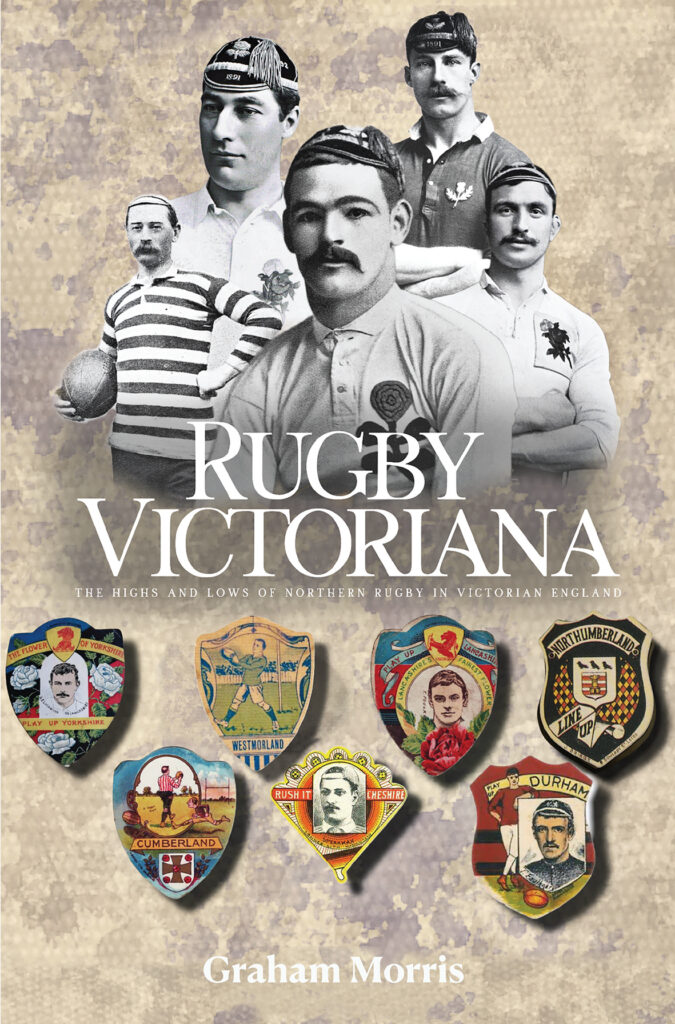
The Highs and Lows of Northern Rugby in Victorian England
By Graham Morris
The Victorian era witnessed a dramatic growth in sport, none more than football, both Association and Rugby, the latter initially proving more popular, particularly in northern England.
Competitive rugby thrived in the north’s industrial communities and its leading clubs attempted to invigorate the code via the introduction of league and cup competitions. In part this was to combat the expanding reach of Association which introduced the F. A. Cup (in 1871-72), professionalism (1885) and the Football League (1888-89). But it was to no avail as Rugby Union’s internal politics, mostly related to accusations of professionalism, led to the historic 1895 split when many prominent clubs, particularly in Lancashire and Yorkshire, created the Northern Union, later renamed Rugby League.
Meanwhile, the Rugby Union abandoned its league competitions, seen as a route to professionalism. It would not be until the 1970s that official leagues were reintroduced, initially as ‘merit’ tables, its amateur ethos ending in 1995. Those competitive 19th century rugby union games have been virtually forgotten. But now, for the first time, the facts and figures from that period are published here in Rugby Victoriana.
Diligently researched by rugby historian Graham Morris, its scope covers the first ever representative game in 1870 – Yorkshire versus Lancashire – up to season 1900-01. Included are details of 622 representative matches, 90 league tables and 99 cup competitions, plus comment on contemporary rugby issues, providing the reader with a flavour of how the game was reported at that time.
Exploits of numerous leading northern rugby union teams of the period are documented, including Aspatria (Cumberland), Birkenhead Park (Cheshire), Hartlepool Rovers (Durham), Kendal Hornets (Westmorland) and Rockcliff (Northumberland). To that list we can add many of today’s rugby league clubs (Barrow, Huddersfield, Hull, Oldham, Swinton, Wigan, Wakefield Trinity, Warrington, etc.) whose first taste of competitive rugby came under the auspices of the Rugby Union during the Victorian era.
Maggie – A Lifelong MG Love Affair
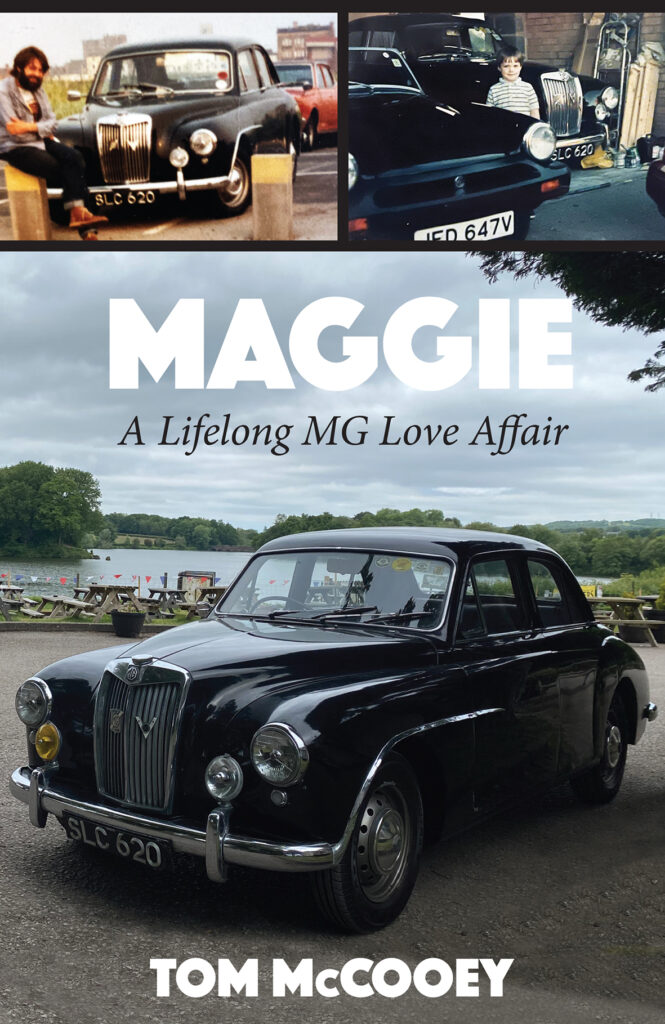
By Tom McCooey
Maggie has been an almost constant presence in Tom McCooey’s life.
An old MG Magnette, she was not much to look at and desperately in need of some love and attention. But to young Tom, sitting in the driver’s seat, smelling the brittle leather and gripping the huge steering wheel, what was sitting in his parents’ garage was more than just his dad’s old car.
He had never seen Maggie move or heard the engine roar into life, but the fact his dad, Will, wouldn’t let go added to the magic and mystique. Aged 14, Tom embarked on bringing the characterful car back to life with Will, but life threw diversions in front of Maggie’s journey back to the road. Tom’s new priorities – including Bon Jovi – ensured the car stayed put and Will’s dream on hold.
Told through the view from the passenger and driver’s seats of the cars throughout Tom’s life, this love affair with the road – and Maggie – has not always been smooth, as each small victory uncovered another seemingly insurmountable problem.
But with understanding, supportive and capable people around them, from family, mechanics and friends willing to push an old car up a hill, will the pieces of Tom and Maggie’s journeys gradually come together in a tribute Will would have been proud of?
For Tom, it was never about what the car was, or might be, worth but preserving something central to his family’s history, and a 36-year perseverance to finally see the job through.
This is a story of restoration in its widest sense. Not just of a classic car but a son paying homage to his father; it’s about relationships, dealing with grief and finding perspective and true value.
